by Daniel Fink, MD, Chair, The Quiet Coalition
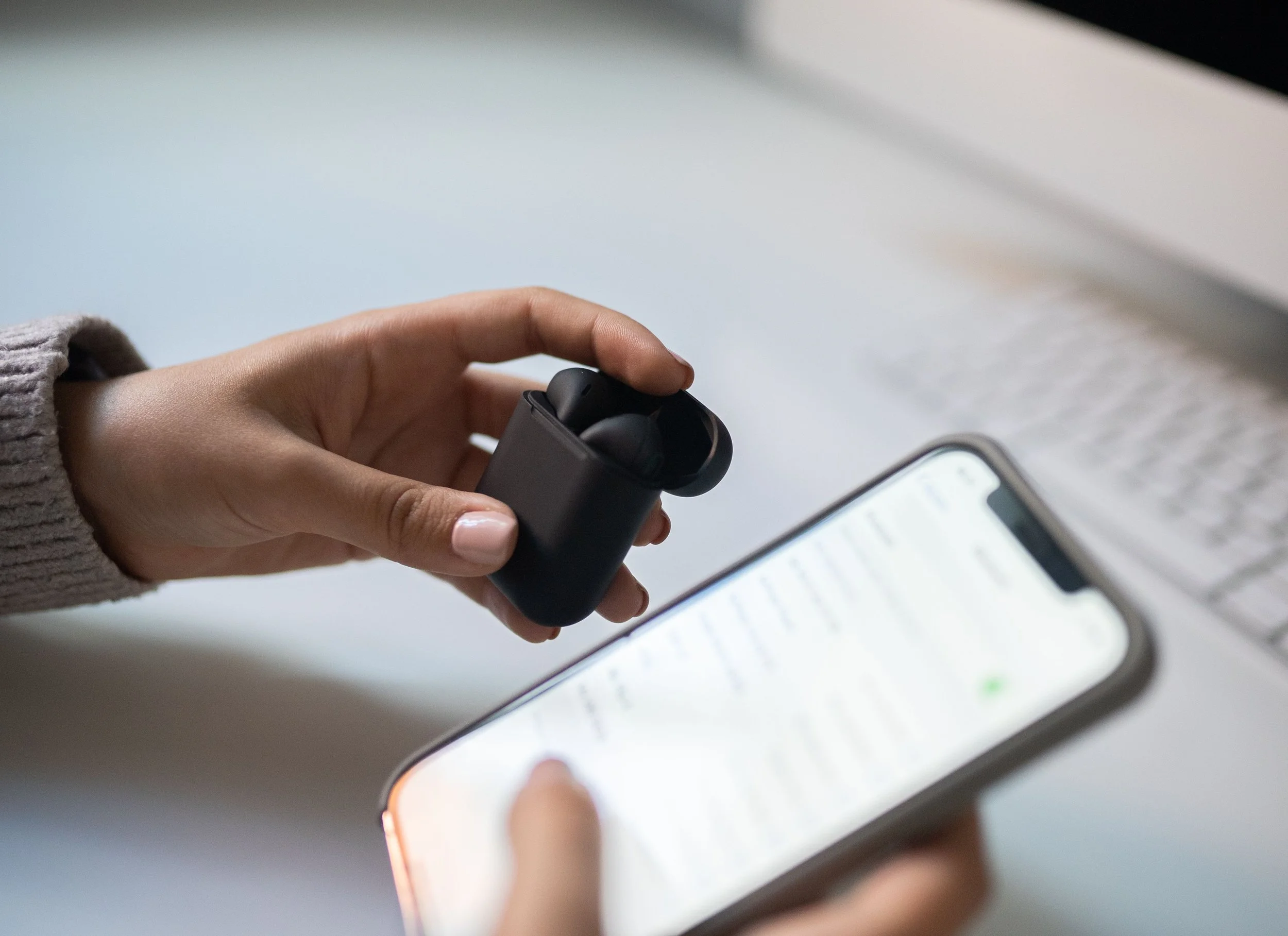
Photo Credit: Dario Fernandez Ruz
After the recent indictment of former FBI Director James Comey for posting a picture of shells on a beach stating 86 47, I think everyone knows that 86 means to discard or get rid of, based on the term’s long-time use in the hospitality industry. Maybe it’s time to 86 the 60/60 rule? Lithuanian physics professor Alius Noreika recently wrote about problems with the 60/60 rule in the Technology.Org website. Thanks to our friend Yishane Lee at Hearing Health Foundation for bringing Professor Noreika’s article to our attention.
The 60/60 rule states that people should listen to their personal listening device for no more than an hour at a time, at 60% of its sound volume output. As Noreika notes, this “rule” is a rough calculation to limit noise exposure for personal listening device users. It is not a safe listening standard. The World Health Organization suggests keeping personal listening device use to under one hour a day, something very few personal listening device users do.
Ever since I first read about the 60/60 rule, I have had several concerns, although I never bothered to articulate them:
Maximum sound output varies widely among personal listening devices. As Noreika notes, 60% sound output from some devices is still dangerously loud.
It isn’t easy on many devices to determine what 60% of the maximum volume is. Noreika doesn’t mention this.
Very few personal listening device users limit their use to one hour at a time, and certainly not one hour a day. This is also not mentioned by Noreika.
Most users turn up the volume to overcome ambient noise levels. As Noreika notes, whether they are walking on the sidewalk, using public transit, or sitting in a coffeehouse, the ambient sound levels probably necessitate turning up the volume higher than 60% of output so they can hear what they want to listen to.
Finally, and perhaps most importantly, the safety of the 60/60 rule has never been empirically measured. What do I mean? As best as I can tell, there is no published research showing that this safe listening advice actually prevents auditory damage.*
What are safe noise exposure levels? As I wrote in 2017, the only evidence-based safe noise exposure level to prevent hearing loss is a time-weighted average of 70 decibels for 24 hours, with the actual safe noise level probably much lower, only 55 A-weighted decibels (dBA)** for a single noise exposure with a daily average of only 55-60 dB.
Based on occupational studies of noise-induced hearing loss, it takes approximately 40 years of exposure for hearing loss to become clinically obvious. Toddlers now start watching videos at age 3, often using headphones so they don’t disturb others. Children start using devices in middle school, and device use is certainly ubiquitous by the teen years. When today’s young people reach midlife, in their 40s, at the peak of family and job responsibilities, I predict that they will have as much hearing loss as today’s old people in their 60s and 70s. I hope someone will remember my attempts to warn the world about the dangers of personal listening devices.
If anyone does follow the 60/60 rule, that listening pattern is probably safer than not following it, but it is by no means safe. Looking for safe listening use, or safe personal listening devices, earbuds, or headphones, is like looking for a safe cigarette. You won’t find one.
If you want to protect your hearing, 86 both the 60/60 rule and your personal listening device. Because if you use personal listening devices, you are undoubtedly damaging your hearing.
*Auditory damage includes three conditions: noise-induced hearing loss, tinnitus, and hyperacusis.
**A-weighting adjusts unweighted sound measurements to approximate the frequencies heard in human speech.