
More about movie noise
by Daniel Fink, MD, Chair, The Quiet Coalition
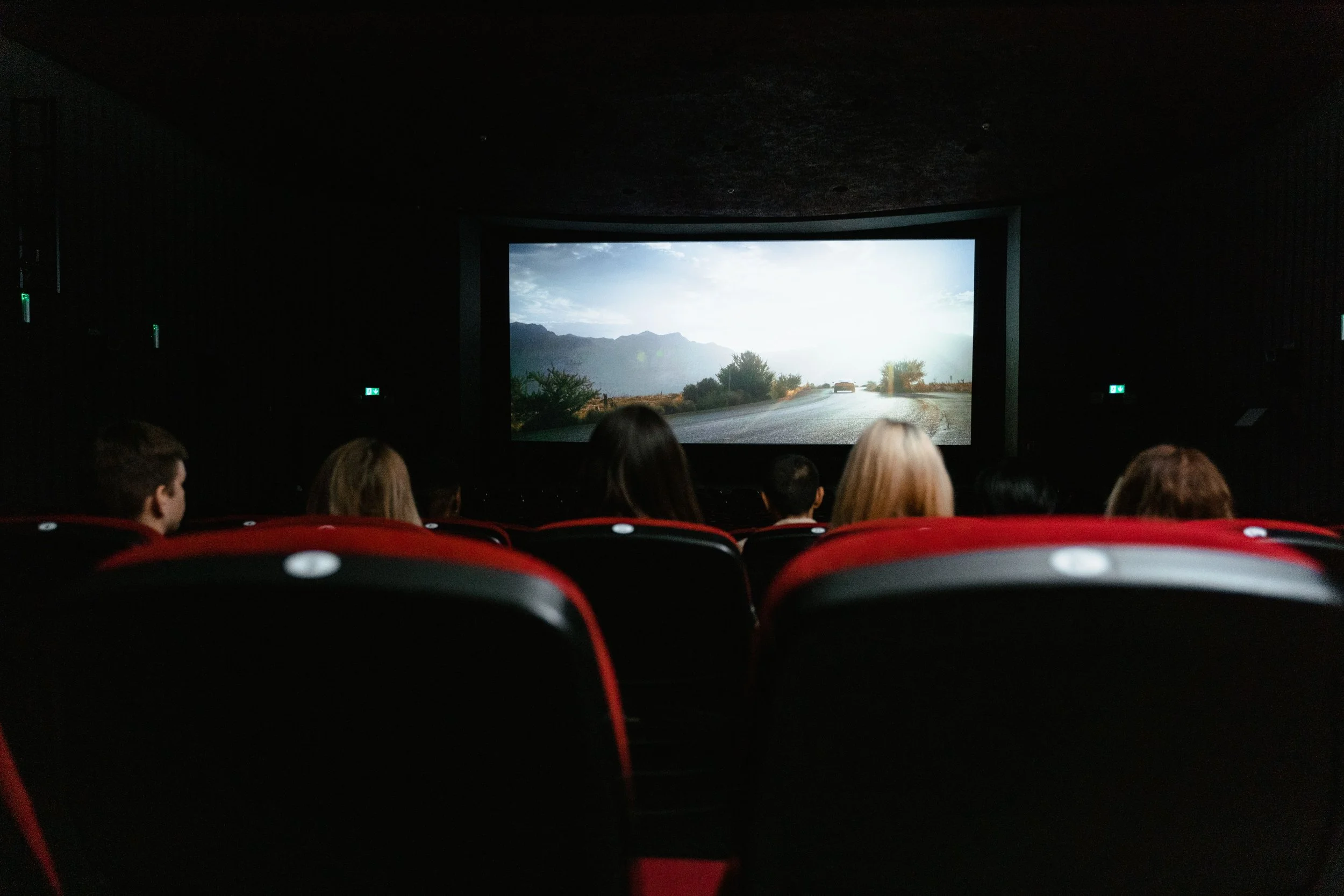
Photo Credit: Tima Miroshnichenko
Research audiologist Cory Portnuff was recently interviewed by reporter Mark Harden for the University of Colorado Anschutz School of Medicine’s webpage about movie noise and other noisy experiences. Portnuff’s research focuses on the prevention of noise-induced hearing loss, including from recreational noise exposure. Harden cites social media quotes about the recently released Odyssey movie, including: “The movie was great and all, but it was severely ruined by the extreme noise,” one says on Reddit. “I was expecting a masterpiece, and yet all I could focus on was the fact my head felt like it would explode,” says another. “I was told The Odyssey would be loud. I wasn’t expecting front row at a Who concert loud,” says a third on Facebook.
Harden then asked the question, “Do loud movies and other noisy events pose a potential threat to our hearing? And what can we do to protect ourselves?” Portnuff gives a well-reasoned response with one exception. He cites, as does the American Speech-Language Hearing Association, the National Institute for Occupational Safety and Health’s industrial-strength recommended exposure limit of 85 A-weighted decibels (dBA), without the A-weighting*, as safe for the public.
This is entirely wrong. The NIOSH recommended exposure limit doesn’t prevent noise-induced hearing loss in workers and is entirely inappropriate for the public. The only evidence-based safe noise level was calculated by the Environmental Protection Agency: a time-weighted average of 70 decibels for 24 hours. The actual safe noise exposure to prevent hearing loss is probably much lower: only 55 dBA for a single noise event and a time-weighted average of 50-60 decibels for a day. Impulse noise exposure, obscured by average sound measurements, probably has a disproportionate effect on the ears and on cochlear synapses. By the way, the World Health Organization recommends a yearly average of only 70 dB from leisure noise.
Anticipating criticism, I am aware that members of the public are almost never exposed to continuous noise for 8 hours a day, 5 days a week, 50 weeks a year, for 40 years. But we are exposed to noise continuously from birth to death, 24/7/365. Almost everyone living in industrialized societies is exposed to noise sufficient to cause hearing loss. The cumulative effects of a lifetime of excessive noise exposure are what cause age-related hearing loss, which I recently dubbed otoaging.
I can summarize the rest of what Portnuff said in one simple phrase: If it sounds loud, it’s too loud, and your auditory health** is at risk. As Portnuff correctly says, use earplugs and reduce your noise exposure. Then your ears should last a lifetime.
*A-weighting adjusts unweighted sound measurements to approximate the frequencies heard in human speech. The inability to hear speech, as measured by pure-tone audiometry, is the compensable workplace injury from noise exposure. There is no conversion formula from unweighted to A-weighted sound measurements, but my observation is that A-weighting reduces unweighted sound measurements by 5-7 decibels.
**Auditory health refers to preventing noise-induced hearing loss and two other conditions largely caused by noise: tinnitus (ringing in the ears) and hyperacusis (a sensitivity to loud noise that doesn’t bother others). There are no studies of how much noise causes either tinnitus or hyperacusis, both of which often accompany noise-induced hearing loss, but avoiding or reducing loud noise exposure should prevent these two conditions as well.