
News and Resources
Find resources including media coverage,
press releases, research, and podcasts.

The Day My Music Died
In this article, Neil Donnenfeld makes the case for restaurants to offer "Quiet Hours" — designated times with reduced music, TV sound, and table-clearing noise. Drawing on his personal experience with single-sided deafness and noise sensitivity following radiation treatment for a benign tumor, Donnenfeld notes that about a third of the population has a condition such as hearing loss, PTSD, tinnitus, or neurodivergence that makes loud restaurants untenable. He argues that Quiet Hours come at no cost to restaurants and could drive revenue by attracting the 46% of diners who say they'd be more likely to eat at establishments offering a quieter option.

Keep Calm and Collect Evidence: Noise Fighting 101
In a detailed interview for the Clamor newsletter, Jamie Banks, founder and president of Quiet Communities, and Rick Reibstein, an environmental lawyer who chairs QC's legal advisory council, offer practical guidance for people fighting noise in their communities. They discuss the patchwork of local noise regulations left by the 1981 closure of the EPA's noise office, the limitations of the decibel as a sole measure of harm, strategies for evidence gathering and engaging local officials, and QC's successful campaign to transition municipalities and school districts — including the entire Los Angeles Unified School District — from gas-powered to electric landscaping equipment.

QC Newsletter: Quieting Florida’s streets, quieter landscaping in the Midwest, and a workshop with Nicole Kelner
This edition of the QC newsletter previews fall events on quieter landscaping in Wilmette, IL, vehicle noise reduction in Naples, FL, a creative workshop with artist-in-residence Nicole Kelner, and a success story from Vermont. It also highlights an August membership drive to strengthen advocacy for quieter communities.

Airplanes are loud and may damage your hearing. Here’s what helps.
Airplane cabin noise—mainly from engines—can cause discomfort and potentially harm hearing, even at levels considered safe. Prolonged exposure may lead to fatigue and health issues. Experts recommend using earplugs or noise-canceling headphones and choosing seats away from the engines to reduce impact.

Downtown Knoxville installing cameras with goal to cut down on car noise
The article details the City of Knoxville’s noise camera pilot program which discovered that excessive car noise was often violating the city’s noise ordinance.
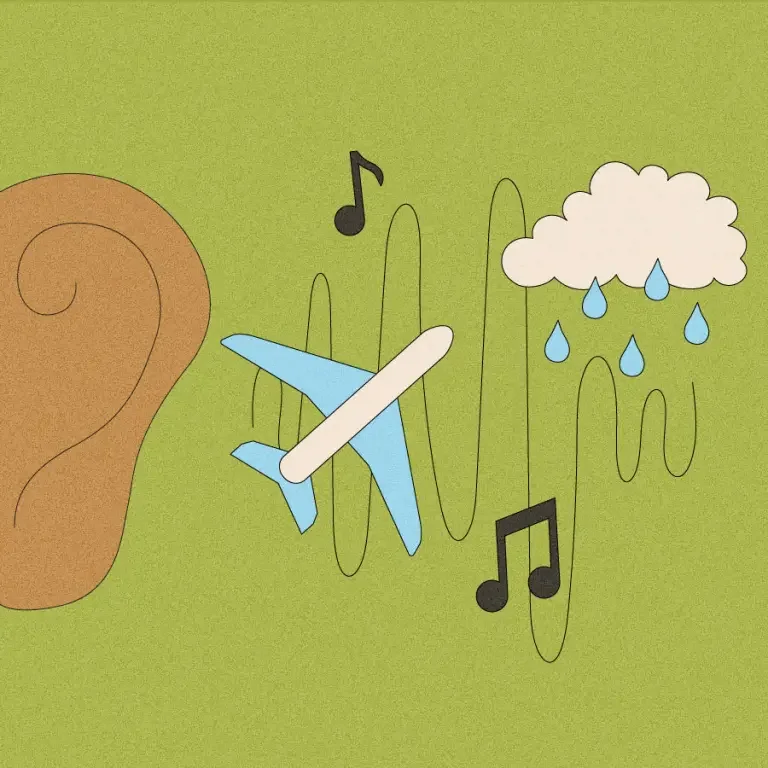
A world built on fossil fuels is loud. Here’s how advocates are defending peace and quiet.
In a Grist feature on how fossil fuel-powered infrastructure drives noise pollution, Jamie Banks, founder and president of Quiet Communities, discusses the organization's lawsuit against the EPA to enforce the still-active 1972 Noise Control Act, as well as QC's work helping municipalities transition to electric landscaping equipment. Mary Tatigian, a registered nurse and advocate with Quiet Florida/Quiet Communities, shares her experience living under Naples Airport flight paths and her long-term vision for quieter communities through cleaner technologies and better public transit.

QC Newsletter: Bid for Quiet: New Auction, Quieter Parks, and Community Innovation
This Quiet Communities newsletter launches the first “Bid for Quiet” fundraising auction and invites new members, celebrates Howard County, Maryland’s first-in-state AGZA Green Zone® park certification, and promotes member-only events on noise law and ordinances.

QC Newsletter: QC and AGZA help LAUSD ‘go greener’
This Quiet Communities newsletter highlights a major milestone as Los Angeles Unified School District achieves AGZA Green Zone certification across 800+ campuses, eliminating fossil fuel-powered landscaping equipment.

Noise Pollution
QC President Jamie Banks and board member Dr. Michael Osborne join a panel on Maine Calling on Maine Public Radio to discuss the causes of noise pollution and how it affects our health.

QC Close-Up with Dr. Michael Osborne and Dr. Jamie Banks
A Quiet Communities member event. We were joined by Dr. Michael Osborne, a preventive and nuclear cardiologist at Massachusetts General Hospital and an Assistant Professor of Medicine at Harvard Medical School. Dr. Osborne's research focuses on understanding how chronic stress—including high levels of noise exposure—affects the body and contributes to heart disease.

QC Newsletter: Greener Schools, Quieter Futures
This Quiet Communities newsletter celebrates LAUSD’s landmark move to fossil fuel‑free, AGZA Green Zone–certified landscaping across more than 800 campuses, creating quieter, cleaner school environments and a national model. It also highlights upcoming events for International Noise Awareness Day, a film screening and author talk on noise, new resources like Ear Peace Foundation’s children’s book on hearing protection and aviation noise symposium recordings, survey results showing gas-powered leaf blowers as a top concern, member programming on noise and heart health, and recent advocacy and media work on airport and gun range noise.

The problem with gas-powered leaf blowers
The article by Allyson Chiu highlights the environmental and health issues associated with gas-powered leaf blowers, including noise pollution, toxic emissions, and habitat disruption. Gas leaf blowers emit significant amounts of pollutants and carbon emissions, contributing to climate change, while their noise can affect human health and wildlife. Many U.S. cities are banning or limiting their use in favor of quieter and cleaner electric alternatives.

Street Illegal, Part 2: Readers and Leaders Speak Out
The blog shares widespread community frustration over noisy vehicles and highlights support for automated noise enforcement. While residents and leaders see the need for action, legal and political barriers remain. The author urges citizens to advocate for stronger noise control measures.

Noise cameras needed to crack down on late-night revving and racing in Toronto streets, advocates say
In a Globe and Mail article on the push to bring noise cameras to Toronto, the late Dr. Arline Bronzaft, a member of Quiet Communities' scientific advisory council and professor emerita at the City University of New York, acknowledges that New York City's noise cameras are just a "drop in the bucket" but argues they serve as both a deterrent and an important signal to noise pollution victims that the government is taking action. The article details efforts by anti-noise advocates in Toronto to adopt the technology already in use in New York, London, and other cities.
The Curative Power of Quieter Cities
The article explores how communities across the country are confronting noise pollution as a serious public health issue, featuring Quiet Communities scientific advisory council members Erica Walker and Rick Neitzel. Walker, an epidemiologist at Brown University who leads the Community Noise Lab, describes her work helping communities like Gloster, Mississippi, collect noise and environmental data to empower informed decision-making. Neitzel, a professor of environmental health sciences at the University of Michigan, notes growing awareness that noise is more than a nuisance and points to systemic solutions like congestion pricing, expanded public transit, and electric vehicles as the most promising long-term approaches.
Community impacts of aviation noise: a pilot survey
A study by Quiet Communities' Jamie Banks and Becky Petrou O'Rourke, published in the Journal of Exposure Science & Environmental Epidemiology, surveyed 1,452 residents of aviation-impacted communities and found that loud, repetitive, low-altitude aircraft noise is causing significant mental and physical health concerns, with military aircraft exposure producing the greatest adverse impacts. The authors argue that current U.S. aviation noise policies, which are decades old and based on outdated concepts of "annoyance," fail to account for the serious health consequences experienced by affected communities and urgently need reform.

QC Newsletter: Small local action, big impact
The Quiet Communities newsletter introduces a hyperlocal campaign to raise awareness about noise pollution and its health impacts, particularly from gas leaf blowers. It highlights upcoming events and initiatives focused on addressing noise issues and encourages community participation by posting flyers. The organization aims to promote quiet as a valuable resource and improve public health.

Hazardous exposures and engineering controls in the landscaping services industry
This study on landscapers' occupational exposures found significant overexposure to noise and respirable crystalline silica (RCS), especially during hardscaping tasks, despite existing engineering controls. Eighty workers at varied sites were monitored, showing noise levels frequently exceeding safety limits, while CO levels remained safe. Fuel-powered tools produced more noise and CO compared to battery-powered versions. Engineering controls could reduce RCS exposure, but additional protection might be necessary.

Hazardous exposures and engineering controls in the landscaping services industry
The research by Barbara M. Alexander and colleagues examines landscapers' exposure to noise, carbon monoxide, respirable dust, and respirable crystalline silica across 11 worksites. Most workers faced noise levels above safe limits, especially with fuel-powered tools versus battery-powered ones. Although CO overexposure was not observed, RCS overexposure was common in hardscaping tasks. The study emphasizes the need for engineering controls and protective measures to reduce these occupational risks.

Sound Off: Policy reform needed to protect public health from aircraft noise
The article highlights a new study by Quiet Communities' Jamie Banks and Becky Petrou O'Rourke, published in the Journal of Exposure Science & Environmental Epidemiology, which surveyed over 1,400 residents impacted by aviation noise. The study found that current U.S. aviation noise policies based on outdated "annoyance" metrics fail to capture the serious mental and physical health consequences experienced by affected communities, with military aircraft exposure being particularly damaging. The Sound Defense Alliance, which advocates against Navy Growler jet noise in the Pacific Northwest, praised the study's call for national policy reform.
As Seen In: