When did sports become so loud?
by Daniel Fink, MD, Chair, The Quiet Coalition
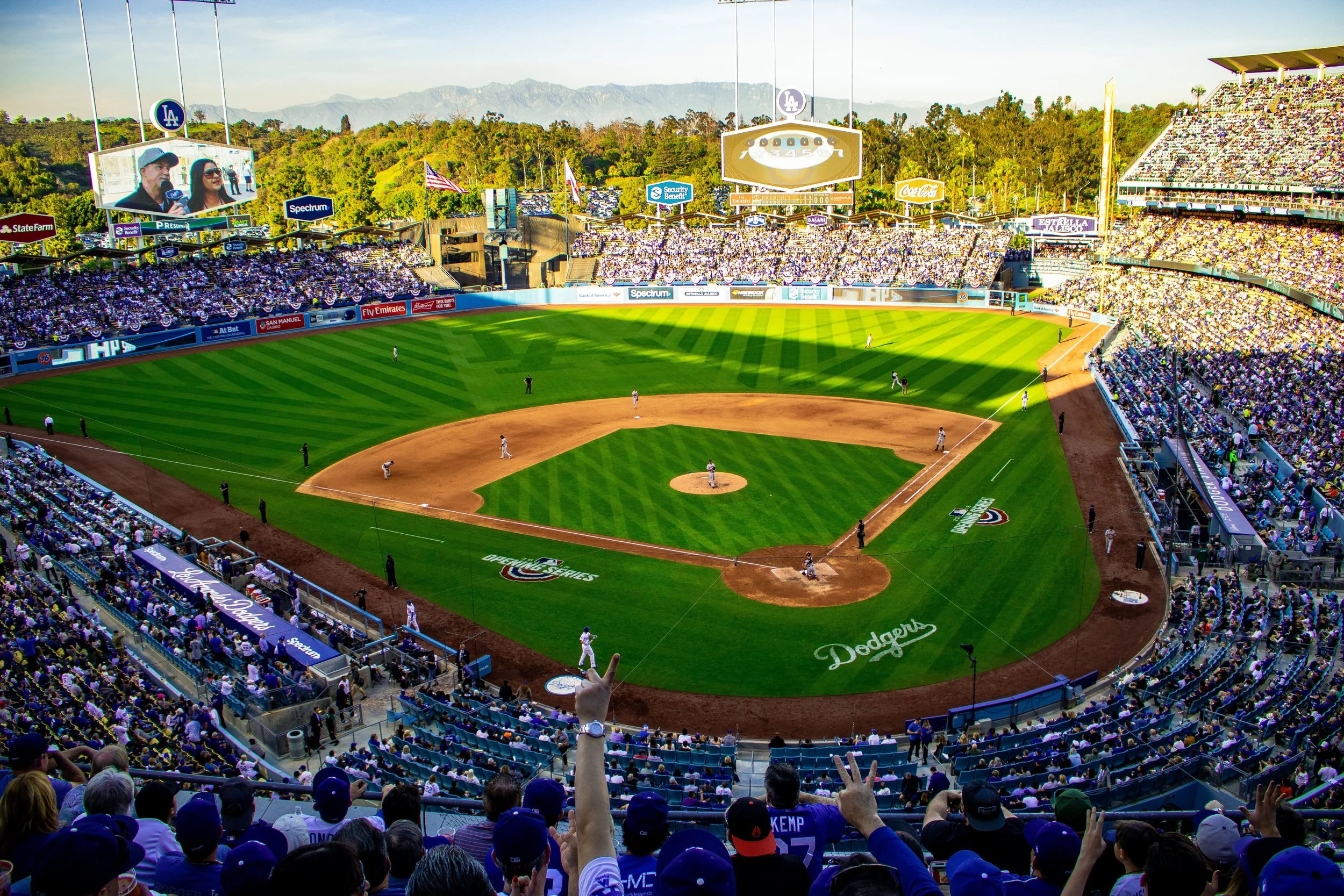
Photo Credit: Centers for Disease Control and Prevention
When did sports become so loud? That’s a question I have had for some years, and also the headline of a recent article in The Atlantic.* The subheading below the title notes, “Athletes have become influencers. In-game production has become “storytelling.” And everything has gotten very, very stimulating.”
I have been attending a few Dodgers games and one or two Lakers games every season starting about 25 years ago, before I developed tinnitus and hyperacusis in 2007 from too-loud noise at a New Year’s Eve party. In the first few years after my noise injury, stadium or arena noise wasn’t a problem, but then it became loud enough to be unpleasant. I started wearing industrial-strength earplugs with a 27 decibel Noise Reduction Rating. During a spell when the Lakers weren’t doing well, the noise level increased to 110-120 A-weighted decibels** measured with a smartphone soundmeter app. I commented to my wife that the team was trying to distract fans from their dismal performance. I started wearing dual hearing protection, both noise-cancelling headphones and the earplugs. Baseball games were quieter than basketball games, but then the Dodgers’ long-time organist retired in 2015–many thought she was forced out–and the games became much louder.
The Atlantic article discusses both Mets and Yankees games, including noise levels, giant video screens, photogenic food, and also the entertaining Savannah Bananas, a traveling team built more on theater than baseball.
The broader context of sports events becoming louder and more flamboyant is what has been called the attention economy. Every commercial venture is shouting, “LOOK AT ME!!! LOOK AT ME!!!!” Attention has been commodified as never before, to get people to spend their time and ideally their money doing or watching one thing rather than another. Social media and internet streaming have played a large role in this. As the article notes, “Any given team is competing for attention with other teams, sure—but really, it’s competing with concerts, and restaurants, and social media, and Netflix.”
Sadly, the article goes on to describe an attempt by Louisville’s minor league baseball team, the Bats, to have a night of baseball without any of the modern attention-getting gimmicks. They called it Nothing Night. No special gimmicks, just baseball. The weather was good, but the stadium wasn’t full. The next night’s game had a Star Wars theme, and it was packed.
What can be done? Other than mandated maximum sound levels at sports events, something unlikely to happen in the United States, I’m not sure that anything can be done except wearing hearing protection or not attending the events. People seem to like the noise even if it is damaging their hearing.
Maybe if enough people complain about the noise, someone will listen, but I doubt it. In the meantime, I encourage everyone to wear hearing protection and especially to make their children use hearing protection.
Baseball used to be called the national pastime, but NFL football may have displaced it in the country’s attention. Regardless, both are our national sports. Play ball!
*This article is behind The Atlantic’s paywall but may be read without subscribing by creating an account. The Quiet Coalition’s informal policy is to avoid writing about articles behind paywalls, but due to The Atlantic’s reputation and the fact that sports event noise at almost all levels is something obvious to anyone who has attended a high school, college, or professional football or basketball game, and Major League Baseball games, we are writing about this article.
**A-weighting adjusts unweighted sound measurements to reflect the frequencies heard in human speech.