
Are movie theaters getting too loud?
by Daniel Fink, MD, Chair, The Quiet Coalition
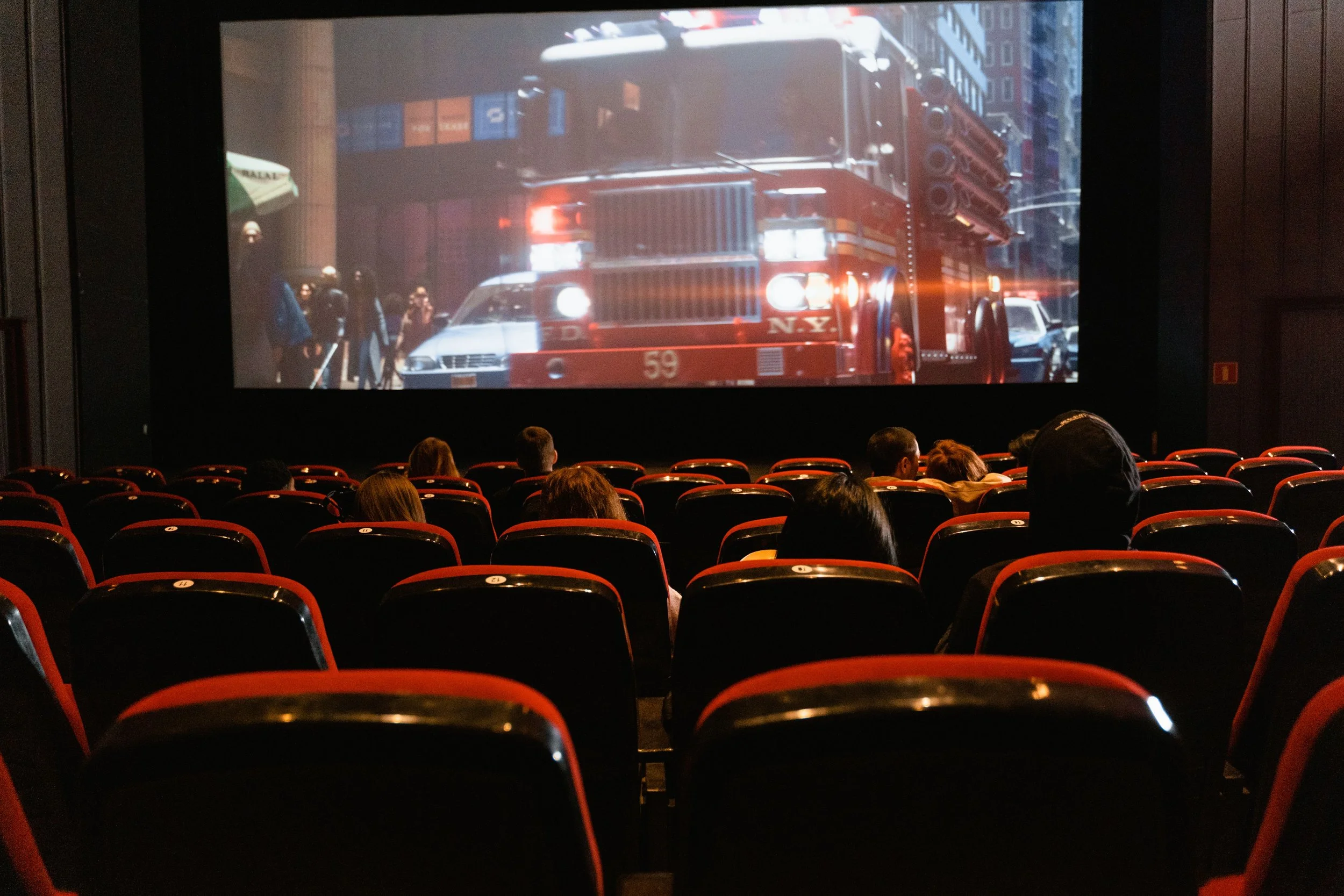
Photo Credit: Tima Miroshnichenko
Are movie theaters getting too loud? That’s the question recently asked in a report by Philadelphia’s National Public Radio station, WHYY. The answer is certainly “yes.”
The report was triggered by a complaint from an older filmgoer and his wife who recorded sound pressure levels of 110.2 decibels (dB) during action scenes. A few weeks later, when he took his grandson to see the new Spiderman movie, they could hear the sound from The Odyssey playing in the adjacent movie theater.
Movie sound levels appear to have increased after Dolby technology was introduced in the 1960s and later made popular by movies like the first Star Wars in 1977. Tape technology had a problem with background hiss, so turning up the volume made the hiss louder. Dolby was an inventor who figured out a way to reduce the hiss, allowing movie theaters to turn up the volume. Complaints about too-loud movie soundtracks are not new. In 2014, a group in Connecticut, Cut Absurdly Loud Movie Sounds, actually got a bill controlling movie sound levels introduced in the state legislature, but it did not pass.
The WHYY report discusses safe noise levels. The only evidence-based safe noise level was calculated by the Environmental Protection Agency in 1974: a daily time-weighted average of 70 decibels. The National Institute for Occupational Safety and Health states that the permissible exposure time for 110 decibels is only 1 minute 29 seconds, so the moviegoer who documented 110.2 dB sound pressure levels undoubtedly suffered hearing damage.
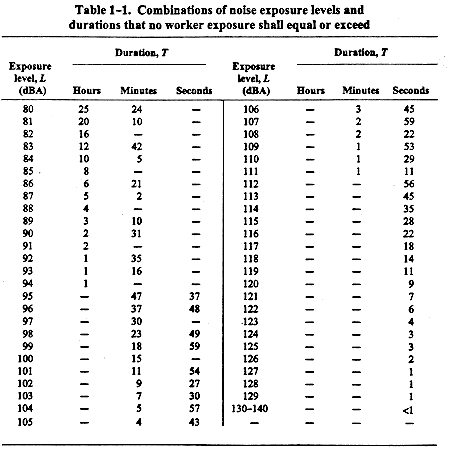
Photo Credit: NIOSH
As I explained in an article in the Journal of Exposure Science and Environmental Epidemiology in 2024, the actual safe noise levels to prevent noise-induced hearing loss may be as low as 55 A-weighted decibels (dBA*) for a single noise event, with a daily time-weighted average of only 55-60 dB. The safe noise level certainly isn’t the industrial-strength 85 dB level too often cited by audiologists and their professional organizations as being safe for listening.
In a paper presented in June at the 15th Congress of the International Commission on Biological Effects of Noise, I argued that the common difficulty older adults have with hearing, often called Age-Related Hearing Loss, is really noise-induced hearing loss from the cumulative effects of a lifetime of excessive noise exposure. If I go to the movies, which is a rare event these days, I insert my earplugs. For The Odyssey, anticipating a too-loud soundtrack, I also brought earmuff hearing protection. Despite using dual hearing protection recommended by NIOSH for noise exposure levels above 100 dBA, my tinnitus was worse after almost three hours of exposure.
Everyone should bring earplugs to the movies. If it sounds loud, it’s too loud, and your auditory health** is at risk. Either get up and leave the movie theater or insert your earplugs to protect your hearing.
*A-weighting adjusts unweighted sound measurements to approximate the frequencies heard in human speech. The new Dolby sound system has a large low-frequency component not measured by A-weighting.
**Auditory health includes normal hearing and the absence of two conditions often caused by excessive noise: tinnitus (ringing in the ears) and hyperacusis (a sensitivity to noise that doesn’t bother others). The noise dose that causes these two other conditions is not known, but reducing noise exposure should help prevent their development.