
In praise of the quiet car
By Jeanine Botta, MPH, Co-founder, The Quiet Coalition
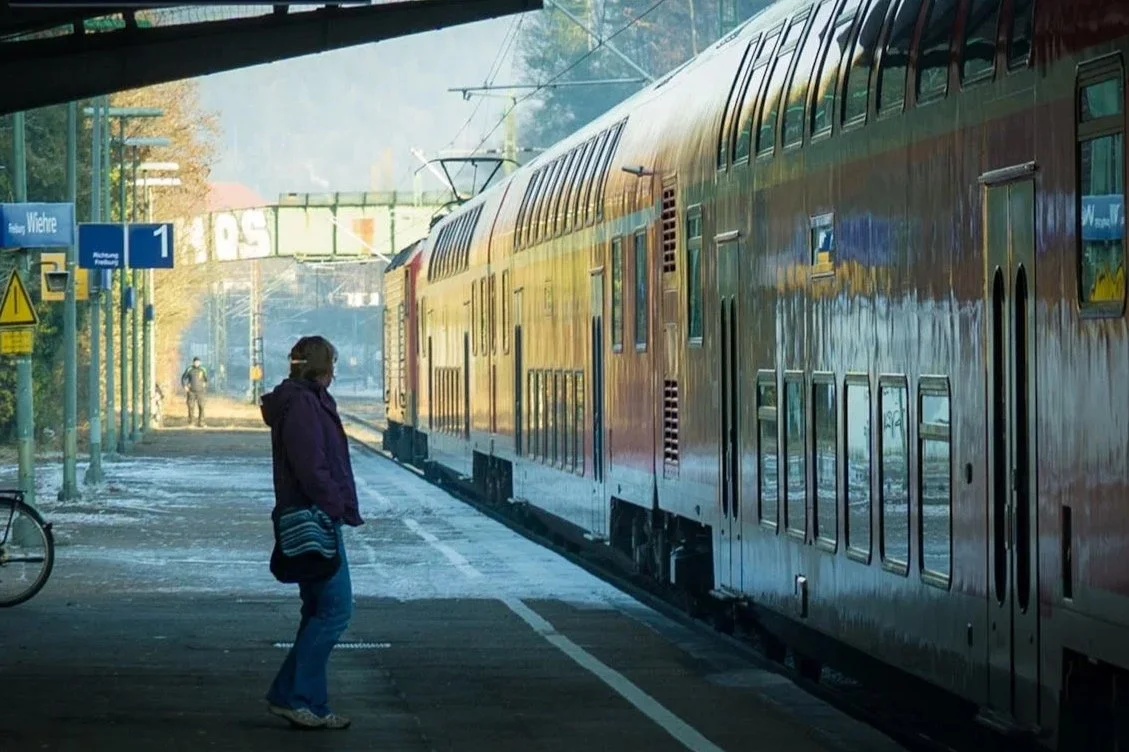
Photo credit: mali maeder
Since our late colleague Arline Bronzaft wrote this post in 2025, Metro-North Railroad’s “Quiet CALMmute” program has not returned, and is unlikely to do so. Although other quiet car programs were already succeeding and greatly appreciated by riders, Metro-North was slow to offer the feature.
While Metro-North refuses to restore the program, other quiet car programs have been introduced around the world. Mackenzie Dawson, commuter and author cited by Bronzaft, notes in her article that the Metro-North quiet car program ended “at a time when it’s never been needed more.”
According to Commuter Action Group founder Jim Cameron, the program didn’t do well in terms of featuring signs and enforcing quiet car policies when it started in 2011. Cameron advocated for years for quiet cars on Metro-North.
In a 2018 Connecticut Post column, Cameron said that Metro-North began reducing the number of its off-peak quiet cars that year. He also noted that the reluctance of conductors to enforce rules in quiet cars led to confrontations between riders. Although Metro-North has done nothing to suggest its leadership fully understands the value of quiet car programs, Cameron argues that the railroad line should bring back the program and do a better job of enforcing the rules.
Quiet cars are not only featured in the American Northeast Corridor. In one form or another, they exist on every continent of the world, and at any given time you will find good news and bad news about the state of quiet car programs.
A report on British quiet cars — quiet carriages — suggests that a lack of enforcement has led to increased use of electronic devices, loud conversations and tablet use at volumes that wouldn’t normally occur in a quiet carriage. The author reports that several rail operators have eliminated quiet carriages, and that some think it’s time to reconsider the carriages’ existence. The article concludes with suggestions that those seeking quiet use noise-cancelling headphones, adjust their expectations and learn to embrace the sounds that accompany public transportation.
By contrast, the majority of passengers who post feedback in online forums are not giving up on quiet carriages, and believe that stricter enforcement is crucial to improvement.
Several news outlets have reported that China’s railway system is expanding the existing quiet car program in its high speed rail network, increasing the number of available quiet cars to 8,000. Tickets are purchased in advance with a request for seating in the quiet car. Riders must accept specific quiet car guidelines, as well.
Caltrain, a commuter rail service that runs along the San Francisco Peninsula, is in the process of implementing a quiet car program. Information about the program is available on its website.
One requirement for any relatively successful quiet car program is the level of respect riders are willing to show to one another. This is something mentioned by those for and against quiet car programs, and it’s as important to a program’s success as enforcement of the rules. Those who are against quiet car programs note that enforcement is more difficult when a basic level of respect is lacking. This is something that matters in the quiet car and in all the rest of the cars. It’s also something that’s likely to differ from one culture to another.
Sandra Lake, a travel blogger, describes the thoughts and feelings experienced during a quiet car ride in Japan. In Japanese culture, quiet is a sign of empathy and respect. Lake only touches on this toward the end of the ride, and the ideas that occur to her during the ride are not linked to the country or its unique culture. Several of her realizations resonated with me, especially the awareness of how much of one’s life is “designed around constant interruption” and the incomparable value of attention. Lake notes “the idea that attention is a kind of wealth.”