News and Resources
Find resources including media coverage,
press releases, research, and podcasts.

QC Close-Up: City of Glendale, CA
In this exclusive QC Close Up with Dan Mabe, President, AGZA and Dan Brotman, Councilmember and Former Mayor of the City of Glendale, California. This Close Up presentation is focused on the topic of transitioning to quieter, healthier electric landscape equipment and some of the huge strides we're making to quiet Landscaping practices across the country.

QC Newsletter: It’s time to kick the noise habit
The Quiet Communities newsletter emphasizes the urgent need to tackle noise pollution, comparing it to "the new secondhand smoke." It highlights a new campaign for raising awareness and celebrates receiving a Phase 2 award for promoting sustainable landscaping practices. The newsletter includes updates on community initiatives, expert insights into noise health impacts, and encourages member participation, offering a complimentary book on noise awareness for members.

Collier County renews push against illegal mufflers amid increasing noise violations
News clip covers the Collier County Noise Task Force and its efforts to curb modified mufflers in the county.

SWFL noise task force cracking down on modified mufflers
News segment details the Southwest Florida Noise Task Force and its efforts to crack down on modified muffler noise in the state.

This is the future of lawn mowers
The article references Quiet Communities and its president, Jamie Banks, who emphasizes the reduced noise pollution and environmental benefits of electric lawn mowers compared to gas-powered models. Banks points out that electric mowers require less maintenance, ultimately resulting in cost savings and creating a friendlier environment for ecosystems and pollinators.

Gas Leaf Blowers are Health Hazards
Gas leaf blowers (GLBs) generate harmful air and noise pollution, posing health risks to children and long-term users. Emissions from GLBs are equivalent to extensive car travel and are linked to respiratory issues, cancer, and other health problems. Their loud noise exceeds safe levels, leading to hearing loss and impaired communication, especially in young children. The article recommends using electric tools and manual methods as alternatives and urges municipalities to ban or restrict GLBs.

‘We’re Living in a Nightmare:’ Inside the Health Crisis of a Texas Bitcoin Town
The TIME article addresses health issues faced by Granbury, Texas, residents due to noise pollution from a Bitcoin mining facility. The excessive noise has caused medical problems like migraines and vertigo. Despite community protests and legal challenges, the mining operation continues, highlighting wider concerns about the industry's environmental and health impacts as it expands across the U.S.

How noise pollution from planes, trains and automobiles can harm human health
The NPR Short Wave episode discusses the issue of noise pollution, emphasizing its harmful health impacts such as increased blood pressure, stress hormones, and risks of cardiovascular diseases. Joanne Silberner highlights everyday sources like highways and gas-powered tools and their disproportionate effects on poorer communities.

Why scientists who study noise pollution are calling for more regulation
The NPR article written by Joanne Silberner, emphasizes the need for stricter noise pollution regulation due to its documented health effects, such as increased risks of heart disease, stroke, and diabetes. Despite the Noise Control Act of 1972, noise regulation has been underfunded and understudied, evident with the closure of the EPA's Office of Noise Abatement and Control in 1981. Quiet Communities recently sued the EPA to encourage enforcement of noise regulations.

From helicopters to fireworks: NYC’s noise pollution may be harming your health
The article highlights the impact of noise pollution in New York City, particularly affecting low-income and minority communities. Helicopters, fireworks, and traffic noise contribute to stress and health issues.

Making Your Yard A Quiet Oasis For Birds With Arline Bronzaft
Dr. Arline Bronzaft, an environmental psychologist from Quiet Communities who specializes in the effects of sound on animals like birds and people, joins the podcast Bird Hugger. She discusses the ways to make your yard a quiet oasis for birds and other critters. Also featured is Catherine Greenleaf, a certified wildlife rehabilitator with 20 years of experience rescuing and rehabilitating injured birds.

How traffic noise hurts children's brains
The BBC article highlights the detrimental effects of traffic noise on children's cognitive development and health. Studies have shown that excessive noise exposure can impair learning, memory, and attention in children, particularly in schools near busy roads or subways.

QC Newsletter: Pollinators, welcome in! Quiet Communities promotes biodiversity with WildOnes partnership
The Quiet Communities newsletter introduces a partnership with Wild Ones to promote biodiversity and eco-friendly landscaping while reducing noise pollution. It highlights upcoming events, including a virtual discussion with founder Jamie Banks and the U.S. premiere of "The Quietest Year."
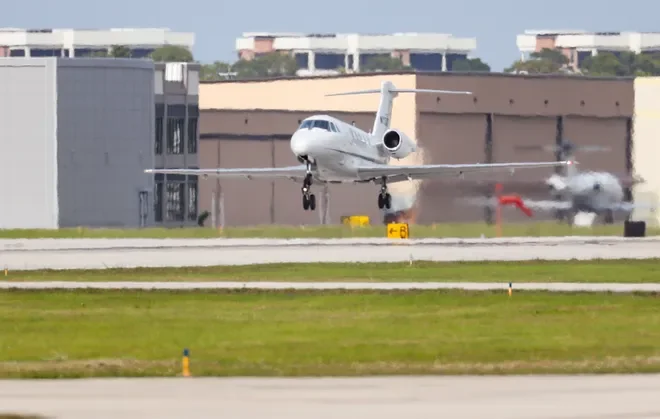
Naples Airport a health problem for residents (Opinion)
In this opinion piece, Mary Tatigian, founder of Quiet Florida and member of the QC scientific advisory council, argues that Naples Airport poses a serious health threat to Collier County residents through both noise pollution and jet fuel exhaust. She highlights that airport noise monitors have recorded levels between 65 and over 100 decibels in residents' yards — far exceeding the World Health Organization's 45 dB threshold for negative health impacts — and that ultrafine particles from jet exhaust can travel miles beyond the airport.

What is the safe noise exposure level to prevent noise-induced hearing loss?
The article by QC’s Daniel Fink in the Journal of Exposure Science & Environmental Epidemiology discusses the safe noise exposure levels needed to prevent noise-induced hearing loss (NIHL). It emphasizes that prolonged or excessive noise exposure can cause hearing loss, tinnitus, and hyperacusis.

Quiet! Our Loud World Is Making Us Sick
The Scientific American article discusses the health risks of noise pollution, including heart disease and diabetes, caused by disruptions to sleep and increased stress. Jamie Banks, who founded Quiet Communities to advocate for noise regulation after experiencing excessive landscaping noise, remains hopeful for future federal action to address and regulate harmful noise levels.

Most N.Y.C. Drivers Who Honk Are Breaking the Law. Can They Be Stopped?
The New York Times article explores the challenge of enforcing bans on illegal honking in New York City, despite its negative health effects. Efforts like noise cameras and advocacy by experts like Arline Bronzaft aim to curb the practice, but persistent driving habits and limited public awareness make it difficult to significantly reduce noise pollution from honking.

QC Newsletter: Noise is everyone’s problem
The Quiet Communities newsletter celebrates a successful year in reducing noise pollution, featuring the upcoming U.S. premiere of "The Quietest Year" and a panel discussion. It highlights the launch of two new programs—Quiet Streets and Quiet Restaurants—and reports the transition of 820 public institutions to cleaner equipment. The newsletter also gathers community input on noise sources and resources needed, while encouraging donations and memberships to support ongoing efforts to improve community well-being.

Quiet Down! Lowering the Recommended Occupational Noise Exposure Limit
The National Institute for Occupational Safety and Health’s (NIOSH) recommended exposure limit for occupational noise is often cited as the upper limit for loudness in all situations-- but that's not actually the case. Worse, the limit may not even fit modern ears, which face a barrage of loud sound in and out of the workplace, starting at an early age. In this episode, we talk to Daniel Fink of Quiet Coalition about how NIOSH's recommended exposure limit for occupational noise impacts even those of us in quiet workplaces, and why the limit needs to be revised downwards.

Noise Is the New Secondhand Smoke
Noise is not just a source of annoyance. It is also a public health crisis. Nighttime aviation noise is particularly harmful to your cardiovascular system and sleep hygiene. This episode features Dr. Mathias Basher talking about his ongoing FAA-funded research on sleep and health; Dr. Peter James discussing his just-published research on noise and cardiovascular health; and Quiet Communities founder Dr. Jamie Banks speaking about their efforts to revive the EPA Office of Noise Control and Abatement.
As Seen In: