
News and Resources
Find resources including media coverage,
press releases, research, and podcasts.

A Guide to Safe and Courteous Use
This booklet shows the proper way to use a leaf blower, as well as the different types of leaf blowers and different jobs that leaf blowers perform. After reading this booklet, you will have a greater understanding of how to use a leaf blower safely and courteously to protect both yourself and the people around you.

Service Pro Certificate Course: Battery-Power Equipment Training for Landscape Professionals
Check out landcare courses available through the American Green Zone Alliance and the National Association of Landscape Professionals.

Quiet, Please: New York’s ‘Noise Cameras’ Are Listening
New York City is expanding the use of "noise cameras" to ticket drivers of loud vehicles, aiming to reduce noise pollution. These cameras activate at sounds over 85 decibels, similar to lawn mowers. The program, recently supported by a new City Council bill, will have cameras in all boroughs by 2025.

The problem with gas-powered leaf blowers
The article addresses the environmental and health issues of gas-powered leaf blowers, which emit significant pollutants and produce disruptive noise affecting communities and wildlife. A MASSPIRG report highlights their carbon emissions, equivalent to pollution from 135,000 cars in Massachusetts in 2020. Many cities, alongside advocacy groups like Quiet Communities, are pushing for a shift to quieter, electric models. Restrictions are increasing, with California set to ban new gas-powered tools next year.

A New Definition of Noise
The editorial by Dr. Daniel Fink advocates for a newly adopted definition of noise as "unwanted and/or harmful sound." This redefinition was endorsed by the International Commission on Biological Effects of Noise and highlights the need to acknowledge both unwanted auditory disturbances and their detrimental health effects.

Hear that? It’s the sound of leaf blower bans.
Many U.S. cities are banning gas-powered leaf blowers due to their noise and pollution. Jamie Banks of the nonprofit Quiet Communities says support for restrictions has grown, especially after the pandemic.

To Save Monarch Butterflies, They Had to Silence the Lawn Mowers
The article details the efforts of Robyn Elman and Patti Cooper, who successfully lobbied New York City officials to protect about 20 milkweed patches vital for monarch butterfly survival. Their grassroots activism underscores how individual and community actions can impact local environmental conservation, despite broader challenges like climate change.

Lawn Care Goes Electric
The report "Lawn Care Goes Electric" suggests replacing gasoline-powered lawn equipment with cleaner, quieter electric alternatives to reduce pollution and noise. Electric models offer long-term cost savings and comparable performance due to advancements in battery technology. To foster this shift, the report recommends incentives, converting government operations to electric equipment, and phasing out polluting gas-powered tools.

Study: Up to One-Third of Americans Exposed to Dangerous Noise Levels
Research shows that prolonged exposure to high levels of noise may be a risk factor for cardiovascular disease. In New York City, not only the largest U.S. city by population but also one of the loudest, avoiding noise can be an everyday struggle. Aron Ranen has the story from the Big Apple.

Fighting noise pollution
The NPR interview addresses noise pollution as a significant health risk, causing issues like heart disease and hypertension. Jamie Banks, founder of Quiet Communities, and Erica Walker discuss its impact, particularly in minority communities, and emphasize the need for better awareness and regulation. While Europe has effective noise-reduction strategies, the U.S. lacks a comprehensive approach. The goal is to promote quiet as essential for health and learning, encouraging communities to mitigate excessive noise.

Arline Bronzaft will talk to your noisy neighbor
This article focuses on Arline Bronzaft’s work to curb harmful noise and more specifically, on New Yorker’s struggle with noise. Bronzaft, PhD, Professor Emerita of the City University of New York, is an Honorary Program Chair of Quiet American Skies at Quiet Communities and on the Board of Director at GrowNYC.

Corporate Landscaping Lets Its Hair Down
The article highlights a trend where companies are replacing manicured lawns with native plants to reduce environmental impact. This move is driven by the need to cut water usage, maintenance costs, and carbon emissions.

Are You Exposed to Too Much Noise? Here’s How to Check.
Noise exposure poses significant health risks, including cardiovascular issues. The New York Times explored these effects, measuring noise levels across the U.S. using professional devices. An online noise map can provide insights, but a more accurate assessment can be done using the NIOSH Sound Level Meter app for iOS. This app helps measure personal noise exposure.

Does Noise Affect Your Life? We Want to Know.
The New York Times is exploring the impact of noise on health and seeking personal stories from readers. The initiative aims to understand how different noise levels affect daily life and long-term well-being. Readers are invited to share their experiences, including noise sources and how they cope. This project aims to uncover the often overlooked threat noise poses to health.

EPA gets sued over lack of noise pollution regulation
The US Environmental Protection Agency shirked its duties to enforce the Noise Control Act, resulting in nationwide noise pollution, a new federal lawsuit alleged. Quiet Communities Inc., a nonprofit dedicated to reducing noise pollution, sued the agency Wednesday in the US District Court for the District of Columbia.

Aircraft Noise and Emission Impacts: A Primer
This 18-minute video describes the impacts that aviation noise and emissions are having on health and environment, the shortcomings of existing policy, and the need for policy that protects those on the ground as well as those in the air. It is intended for to help inform policy for decisionmakers and to educate members of the public and others.
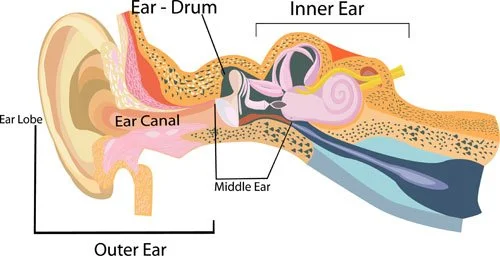
The safe noise level to prevent hearing loss is probably lower than you think
Daniel Fink, Board Chair of the Quiet Coalition — a program of Quiet Communities — presented research at the 183rd meeting of the Acoustical Society of America arguing that the safe noise level to prevent hearing loss is significantly lower than commonly believed. Fink explains that the widely cited 85 dB occupational threshold does not protect all workers, and that the EPA's evidence-based safe level of 70 dB still doesn't account for lifetime exposure, suggesting the true safe level may be as low as 55 dB.

Experts Suggest How And Why To Reduce Noise At Home
Noise from transport and household sources can harm well-being, causing stress and health issues. Experts recommend using double-paned windows and insulation to reduce noise. Addressing acoustics during home construction or remodeling is key, and noise machines can help mask sounds. Jamie Banks, founder of Quiet Communities, is cited in the article.

Yards on Fire- Gas Powered Lawn Equipment & Health
This podcast episode discusses the health and environmental impacts of gas-powered lawn equipment, focusing on emissions from two-stroke engines and noise pollution. Hosts and guest experts, pediatricians Dr. Elliot Krane and Dr. David Axelrod from Stanford University, highlight how these small engines generate significant pollution, comparable to driving a Ford F150 truck over long distances. The episode explores health implications, particularly on children, and suggests electric or manual alternatives. It encourages community actions for cleaner air and advocates for policies to transition away from gas-powered tools.

New England Botanic Garden at Tower Hill
New England Botanic Garden at Tower Hill is the first U.S. botanic garden to receive AGZA Green Zone certification by transitioning to electric landscaping equipment. This effort, in collaboration with AGZA and Quiet Communities, aims to reduce carbon emissions by 50 tons annually. A ceremony and summit will celebrate and discuss these sustainable practices.
As Seen In: