
News and Resources
Find resources including media coverage,
press releases, research, and podcasts.

EPA gets sued over lack of noise pollution regulation
The US Environmental Protection Agency shirked its duties to enforce the Noise Control Act, resulting in nationwide noise pollution, a new federal lawsuit alleged. Quiet Communities Inc., a nonprofit dedicated to reducing noise pollution, sued the agency Wednesday in the US District Court for the District of Columbia.

Aircraft Noise and Emission Impacts: A Primer
This 18-minute video describes the impacts that aviation noise and emissions are having on health and environment, the shortcomings of existing policy, and the need for policy that protects those on the ground as well as those in the air. It is intended for to help inform policy for decisionmakers and to educate members of the public and others.
The safe noise level to prevent hearing loss is probably lower than you think
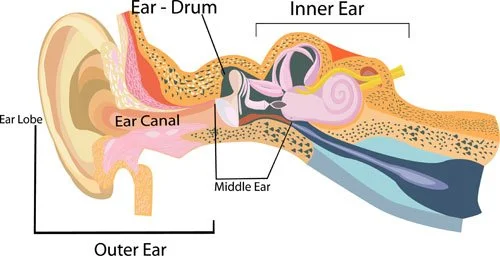
Daniel Fink, Board Chair of the Quiet Coalition — a program of Quiet Communities — presented research at the 183rd meeting of the Acoustical Society of America arguing that the safe noise level to prevent hearing loss is significantly lower than commonly believed. Fink explains that the widely cited 85 dB occupational threshold does not protect all workers, and that the EPA's evidence-based safe level of 70 dB still doesn't account for lifetime exposure, suggesting the true safe level may be as low as 55 dB.

Experts Suggest How And Why To Reduce Noise At Home
Noise from transport and household sources can harm well-being, causing stress and health issues. Experts recommend using double-paned windows and insulation to reduce noise. Addressing acoustics during home construction or remodeling is key, and noise machines can help mask sounds. Jamie Banks, founder of Quiet Communities, is cited in the article.

Yards on Fire- Gas Powered Lawn Equipment & Health
This podcast episode discusses the health and environmental impacts of gas-powered lawn equipment, focusing on emissions from two-stroke engines and noise pollution. Hosts and guest experts, pediatricians Dr. Elliot Krane and Dr. David Axelrod from Stanford University, highlight how these small engines generate significant pollution, comparable to driving a Ford F150 truck over long distances. The episode explores health implications, particularly on children, and suggests electric or manual alternatives. It encourages community actions for cleaner air and advocates for policies to transition away from gas-powered tools.

New England Botanic Garden at Tower Hill
New England Botanic Garden at Tower Hill is the first U.S. botanic garden to receive AGZA Green Zone certification by transitioning to electric landscaping equipment. This effort, in collaboration with AGZA and Quiet Communities, aims to reduce carbon emissions by 50 tons annually. A ceremony and summit will celebrate and discuss these sustainable practices.

City of Knoxville, Noise Camera Pilot
Excessively loud vehicle noise such as engine revving, aggressive driving, and illegally modified mufflers have led to an increase in complaints from Downtown residents. To better understand the nature of this problem and collect data on illegally noisy driving, the City of Knoxville has deployed a mobile noise capture camera around Downtown Knoxville.

Leading in Clean Quiet Landcare
The two hour conference brought together municipal, regional, and national leaders who are transitioning their communities to cleaner, quieter landcare practices. Discover what it takes to make change happen, the opportunities and challenges, and the importance of collaboration and stakeholder engagement.

Noise camera company explains tech ahead of Knoxville test
You may start spotting noise cameras when you’re driving around Knoxville. The city said it’s planning to test the new device. They’re sort of like a red light camera – but triggered by sound, mainly from loud cars.

California Becomes First State in the Nation to Phase Out Gas-Powered Leaf Blowers
California has become the first state to phase out gas-powered leaf blowers and small off-road engines by enacting Assembly Bill 1346. Signed by Governor Gavin Newsom, the law requires zero emissions for these engines by 2024 and allocates $30 million to help landscaping businesses transition to zero-emission equipment.

Lawn care is going electric. And the revolution is here to stay
The article highlights the growing trend of electric lawn care equipment in the U.S., driven by a desire for quieter and more eco-friendly solutions. Communities like Mountain Brook, Alabama, are transitioning to electric tools to reduce noise and emissions, despite higher initial costs and some performance challenges. The shift is gaining momentum nationwide, with figures like Jamie Banks of Quiet Communities advocating for widespread adoption to maximize environmental benefits.

Lawn and Garden Equipment Sound: A Comparison of Gas and Battery Electric Equipment
This study compares noise from gas-powered leaf blowers (GLBs) and battery-powered leaf blowers (BLBs), revealing significant differences in sound levels and impact on community health. GLBs are found to be much louder, particularly in low-frequency noise, which can transmit over long distances and through home windows, causing greater disruption than BLBs. The study suggests that transitioning to BLBs can mitigate health risks posed by GLBs' noise and emissions, advocating for policy changes to prioritize public and worker health.

Town of Southampton AGZA Green Zone
The Town of Southampton, NY transitioned all its municipal operations to battery electric technology, creating the first AGZA Green Zone® community in the Northeast, and engaging the business community.

Technical Note: Leaf Blower Regulation Amendment Act of 2017, Bill 22-234
Arup conducted tests on three gas and four battery-powered leaf blowers to assess their noise impact. The results revealed that gas leaf blowers produce a significantly higher low-frequency sound component, which travels further and penetrates home windows more easily, making them noticeably louder indoors and contributing to greater noise disturbance in the community compared to battery leaf blowers.

Report in Support of the Leaf Blower Regulation Amendment Act of 2017, Bill 22-234
Jamie Banks, Executive Director of Quiet Communities, supported Bill 22-234, which regulates gas leaf blowers (GLBs) in Washington, D.C. She emphasized the health risks of GLBs, including noise pollution and emissions affecting vulnerable populations, and advocated for battery-powered leaf blowers (BLBs) as a cleaner, quieter alternative. Her testimony urged prompt legislative action to improve air quality and community well-being.

Post-hearing statement to the Washington, D.C. City Council’s Committee of the Whole Regarding the Leaf Blower Amendment Act of 2017 (Bill No. 22-234)
Dr. Daniel Fink, Board Chair of The Quiet Coalition, submitted a statement to the D.C. City Council supporting the Leaf Blower Amendment Act of 2017 (Bill No. 22-234). He warned that gas-powered leaf blower noise poses serious health risks, including hearing loss and other health issues, and noted that its low-frequency sound travels further and impacts more residents than battery-powered alternatives.

Characteristics of Lawn and Garden Equipment Sound: A Community Pilot Study
The study examines noise pollution from over 11 million gas-powered leaf blowers in the U.S., which often exceed WHO noise standards up to 800 feet. The noise, surpassing 100 decibels due to low-frequency sound, affects health and communities. These findings support noise restrictions and suggest that standard decibel measurements are more accurate than A-weighted ones.

Noisy, but that’s not all: the health threat posed by leaf blowers
The article highlights the health risks and pollution from gas-powered leaf blowers, which emit toxic pollutants. Workers face health issues from exposure, and despite regulations pushing for electric alternatives, industry resistance persists. Advocacy groups like Quiet Communities, founded by Jamie Banks, are working to promote the transition to electric equipment to reduce health and environmental impacts.

Noisy, but that’s not all: the health threat posed by leaf blowers
The article by Stuart Silverstein and Anne Boiko-Weyrauch discusses the pollution and health risks from gas-powered leaf blowers, highlighting emissions of toxic substances like benzene and ultrafine particles that pose serious health risks, particularly to landscaping workers. Jamie Banks, founder of Quiet Communities, is mentioned for advocating against noise and emissions from such equipment. Efforts to switch to electric equipment are growing, supported by incentives in some regions to promote cleaner alternatives.

Lawn Mower Noise
Noise measurements of 496 lawn mowers were made at 25 feet and at the operator’s ear between 2004 and 2017. In total, more than 2,000 different measurements were made. Several trends in lawn mower noise were observed. 1) Newer electric lawn mowers are significantly quieter and perform better than the older ones. 2) Newer gas powered walk mowers may be a decibel quieter. 3) Ride-on mower noise levels are pretty much unchanged and dependent on the size of the engine. 4) Compared to EPA noise measurements of mowers from 1973, very little progress has been made quieting mowers.
As Seen In: